Die Theatermacherinnen
(“The Women Theatre Makers”)
Attempt at a Sequel
A production by Carmen Kirschner
In co-production with Theater am Werk
Premiere: 27.03.2026,
Theater am Werk, Petersplatz, Vienna
Concept & Adaptation: Carmen Kirschner
Directed by: Mateja Meded
Text by: Hannah K Bründl,
with interviews by Helga Illich and Johanna Tomek
Performed by: Carmen Kirschner, Berenice Pahl
Sound Recordings: Johannes d’Amico
Video Assistance: Julia Witthalm
Prompting: Leonie Letonia
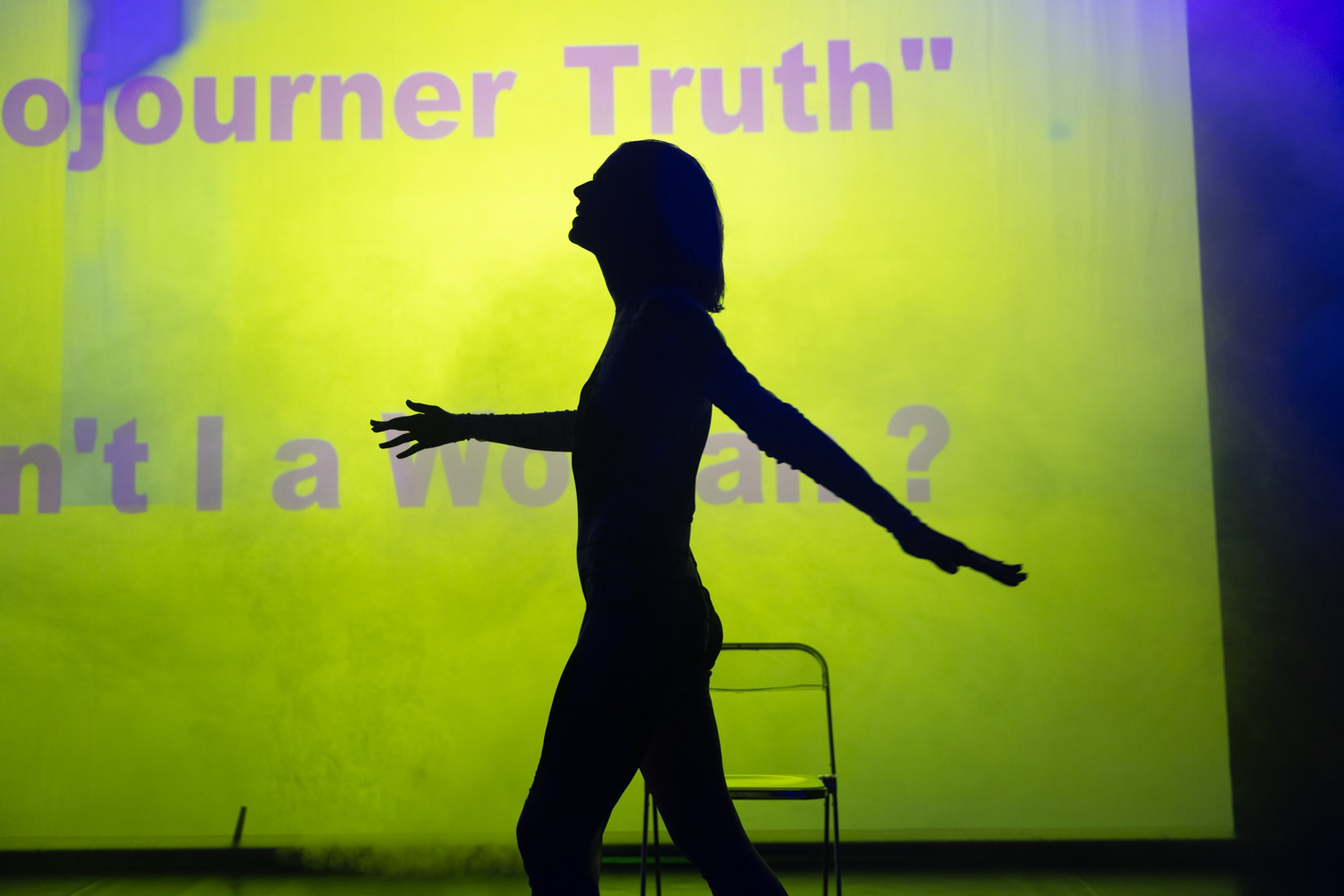
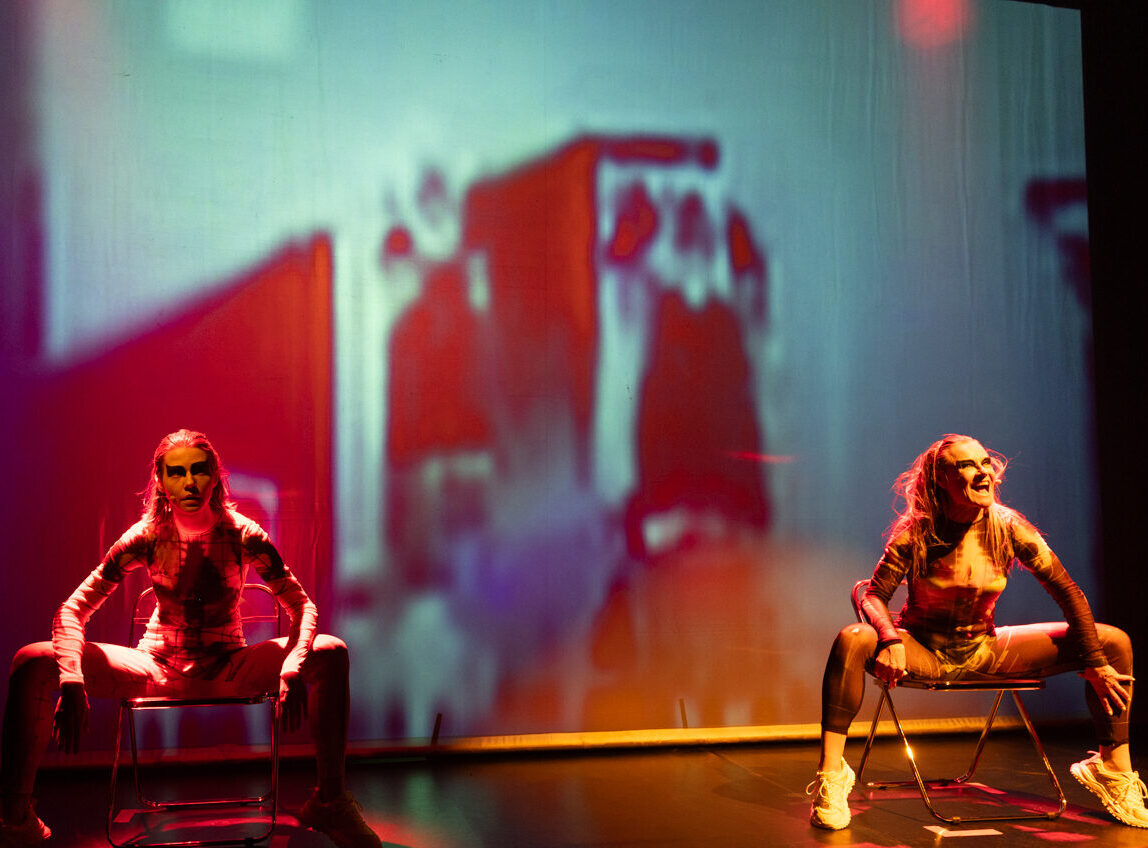
Die Theatermacherinnen traces the paths of its pioneering predecessors: with the intensity of a techno party, the performance explores the transmission of knowledge and transformation across generations — from experiences of war and the absurdities of the theatre world to #MeToo.
In the 1980s, Johanna Tomek initially directed under the pseudonym “August Himmel,” because the idea of a female director was still unimaginable to many. She was an actress, director, and co-founder of the Schauspielhaus Wien, Drachengasse, and later Theater m. b. H..
The independent theatre scene of the 1980s and 1990s was a time of occupied buildings, criticism, action, and radical reinvention — swept along by a sense of possibility. Romantic? Democratic and undemocratic decisions alike were made here; structures were dismantled and reproduced at the same time.
Her colleague Helga Illich — actress, director, and co-artistic director of Gruppe 80, and therefore one of the founding figures behind the theatre house on Gumpendorfer Straße — never considered herself a feminist. The fact that she directed exclusively female playwrights after stepping in for an absent male director, she claimed, was merely coincidence.
Gradually, more and more pioneers from across history emerge and make one thing unmistakably clear: we have always been here.
“(…) to pay tribute to those women who, against all conventions and traditions of the time, succeeded in directing or running a theatre. (…) the 1980s, when Helga Illich and Johanna Tomek were among the few women in Vienna’s independent theatre scene who had fought their way into visibility. They transform these two specific stories and their defiance into a larger narrative that reaches into the present day (…)”
Carmen, how did you come up with the idea of creating a theatre piece that explores, among other things, the history of Vienna’s independent performing arts scene and places two of its former protagonists — Helga Illich and Johanna Tomek — at its centre?
Carmen: I first met Helga Illich and Johanna Tomek through working in theatre. I was fascinated by their work, their wealth of experience built over decades, and their personalities. They became role models for me — women I could identify with, women who had walked the path of theatre-making before me. I could listen to them for hours. And when I realized that today they are far less well known than they should be, I decided to create this theatre piece inspired by them.
Berenice, you worked a lot with Johanna Tomek at the Theater m. b. H. back then. What was it like for you to bring your experience from that time into the present-day production?
Berenice: On the one hand, I was very happy to take part, because after Theater m. b. H. was effectively shut down through the theatre reform, I no longer found any directors who staged women in an intelligent way. In 2003, I made a documentary about the reform in which Johanna Tomek often appeared. Parts of this material were incorporated into the rehearsal process.
For example, the fact that the independent scene at the time was less institutionalised than it is today, which allowed for a more creative process. The question of care and attentiveness in theatre is a major topic today, but in my experience with Johanna, humanity was at the centre — including a sense of empathetic collaboration.
The themes of your theatre piece are diverse — it deals with role models, representations, female directing, from the 1980s to the present. What surprised you during your research for this production?
Carmen: I was surprised that Helga Illich and Johanna Tomek did not even see themselves as feminists. And that Helga ended up directing only female playwrights she described as coincidence. Another key insight was that these pioneers exist in all areas of life. The knowledge is there — and we can make use of it for ourselves.